
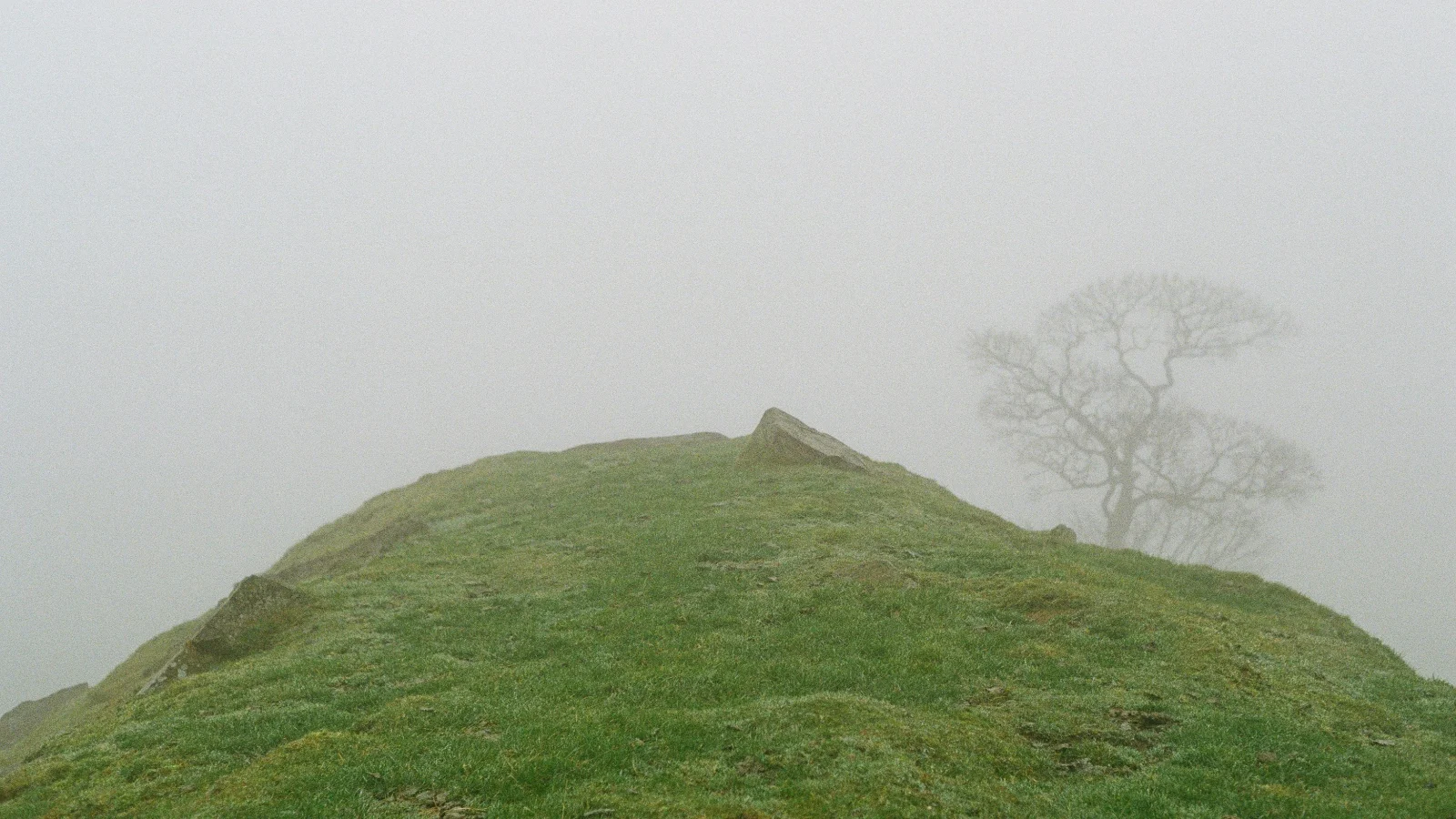
The Walshaw Turbines Research Group (WTRG), part of Stronger Together, has published a detailed new analysis of Crow Hill and the proposed Calderdale Energy Park (CEP) on Walshaw Moor.
The report sets out the evidence behind potential legal action concerning the consultation for the proposed development at Crow Hill. WTRG argues that the consultation was unlawful under the principles of English common law governing lawful consultation, and that the evidence raises serious questions about the way the project has assessed peat landslide and bog-burst risk.
The Crow Hill problem
Crow Hill is central to the current Calderdale Energy Park proposal. WTRG’s analysis focuses on the proposed access infrastructure required to bring turbine components and construction materials onto the site, including the 616,000 tonnes of imported noncalcareous hardstone identified in WTRG’s earlier report.
The proposed access route crosses an area which WTRG says has an exceptional history of peat instability and repeated bog bursts, including recorded events in 1824 and a further bog slide in 1989. The report argues that this history makes Crow Hill fundamentally different from the areas normally assessed using standard peat landslide susceptibility methods.
WTRG also challenges the Preliminary Peat Landslide Hazard and Risk Assessment in PEIR Appendix 10-4, arguing that it contains serious errors and omissions in its treatment of the Crow Hill evidence. Among the issues identified are the omission of the 1989 bog slide from the assessment despite references to the relevant published evidence, and the lack of peat-depth data needed to properly assess the proposed access route.
A late change with major consequences
The report examines the history of the Calderdale Energy Park site boundary and argues that Crow Hill was brought into the proposal at a late stage, after earlier iterations of the development had avoided it.
WTRG also considers advice from the Planning Inspectorate (PINS) concerning material changes to the proposed development, environmental constraints, the mitigation hierarchy and the need to explain how the design has evolved. The report argues that the extension onto Crow Hill represents a significant change that should have triggered further scrutiny and consultation.
The analysis also compares the chosen Crow Hill access route with the alternative approach through Halifax. WTRG argues that the Halifax route presented finite engineering difficulties, whereas the Crow Hill route introduces what it describes as potentially indefinite risks associated with peat instability and bog bursts.
The legal question
The Crow Hill evidence is being prepared as the basis for a letter-before-action from Haworth-with-Stanbury Parish Council. WTRG says the proposed legal action concerns whether the consultation carried out by Calderdale Wind Farm Ltd, financed by Algihaz, complied with the requirements of English common law.
The report argues that the significance of the evidence extends beyond the immediate consultation. If the issues identified by WTRG cannot be resolved, it says they could become relevant to the future Development Consent Order (DCO) process and any subsequent judicial review.
WTRG’s conclusion is stark: the current proposal cannot proceed on Crow Hill without confronting the evidence concerning peat instability, the adequacy of the environmental assessment, the consultation process and the choice of access route.
The report therefore argues that Calderdale Energy Park should be withdrawn, or fundamentally redesigned to avoid Crow Hill, followed by further consultation.
Calderdale Energy Park is a zombie, WTRG argues. This report sets out the Crow Hill evidence behind that conclusion — and explains why the legal and planning questions surrounding the proposal are becoming increasingly difficult for Algihaz to ignore.
The views and allegations summarised above are those of the Walshaw Turbines Research Group and are set out in its full report.
Stop Calderdale Energy Park © by Stronger Together to Stop Calderdale Windfarm
Stronger Together to Stop Calderdale Windfarm is licensed under Creative Commons Attribution-NonCommercial-ShareAlike 4.0 International