
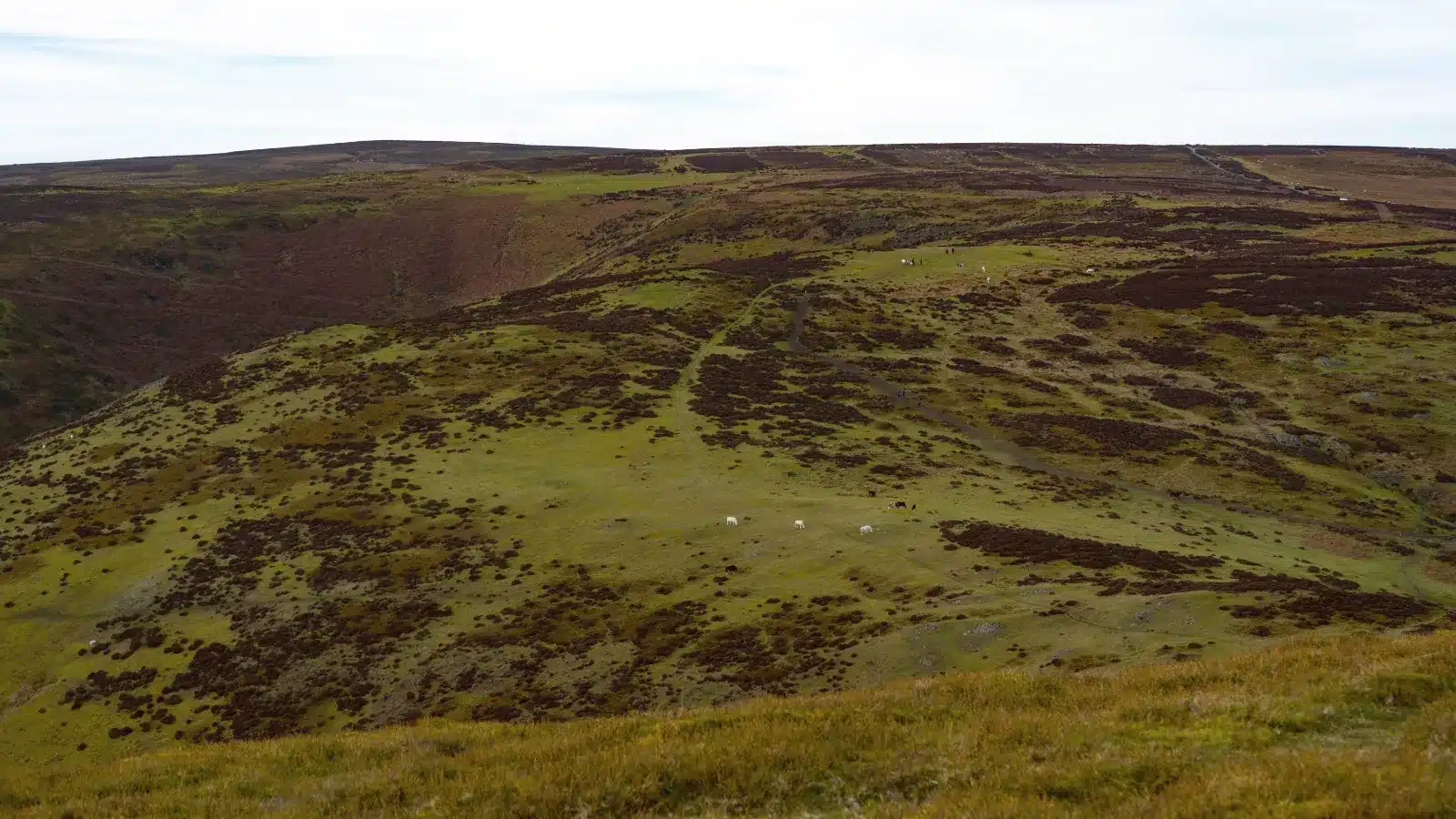
The question has been hanging over Calderdale Energy Park for some time: what does Natural England, the government’s statutory adviser on the natural environment, actually think about the proposal to build on Walshaw Moor?
Now we have a clear answer.
A covering letter dated 10 June 2026, accompanying Natural England’s formal response to the Section 42 consultation on Calderdale Energy Park, sets out fundamental concerns about the proposed development and its potential effects on protected habitats, birds, peatland, landscape and ecosystem functioning.
Natural England says the evidence in the Preliminary Environmental Information Report (PEIR) demonstrates that the proposed site is an “exceptional area for nature”, containing internationally important habitats, birds and landscape character. The agency notes that baseline surveys recorded more than 100 bird species and more than 1,000 hectares of irreplaceable blanket bog — identified as the key feature of the Special Area of Conservation (SAC).
Natural England also says it believes the quality of the SAC habitats and their ecosystem functioning have been consistently underestimated in the PEIR’s Biodiversity Chapter, with consequences for the assessment of impacts and the amount of mitigation and compensation required. It raises particular concerns about the carbon consequences of destroying or damaging peatland, saying that potential CO₂ emissions have not been adequately accounted for because of what it describes as under-precautionary assumptions concerning peat volume, carbon density, storage, restoration effectiveness, hydrology and electricity yield
The agency identifies a wide range of potential impacts. These include displacement, disturbance, collision risk and habitat loss for birds; destruction and long-term degradation of peatland; loss of biodiversity; damage to peatland ecosystem functioning; and the release of CO₂. It also identifies significant effects on the Calderdale Special Landscape Area, which Natural England says has high national value and cultural significance as Brontë Country, as well as wider effects on four Protected Landscapes and their settings.
There is also a significant issue around site selection and alternatives. Natural England points to national policy stating that applicants should rule out other locations before siting on peatland, particularly areas of deep peat. It says the PEIR does not demonstrate how alternative non-peatland locations were identified or considered, and advises that alternative sites should be explored beyond the restrictive parameters proposed in the site’s selection criteria.
And Natural England has considered whether the proposed changes to Calderdale Energy Park have solved these problems. The proposal has already been reduced from 65 to 34 turbines, while the battery storage and solar elements have been removed. However, Natural England says that although these changes have reduced some localised impacts, the overall impacts remain extremely high. It notes that substantial infrastructure, including turbines, access tracks and cabling, remains on deep peat.
The most striking part of the letter concerns compensation. Natural England says it has concerns about the technical and ecological feasibility of compensating for the scale and complexity of the proposed loss of irreplaceable habitat, bird impacts and changes to ecosystem functioning.
Its reasoning is stark
Blanket bog cannot simply be recreated. It takes thousands of years to form and depends on particular climatic and hydrological conditions. Natural England also says that recreating an extensive, complex upland habitat mosaic capable of supporting a similar diversity and density of breeding birds is not considered possible within any realistic timescale.
That leads to Natural England’s central conclusion. The agency advises that it does not expect it will be possible to agree effective measures that adequately compensate for the effects of the development. Overall, it considers these issues “likely to be insurmountable” in its engagement with the application and in relation to compliance with the Habitats Regulations.
Natural England says it will continue engaging with the developer and would welcome Expert Topic Groups involving relevant consultees, including the Environment Agency. But it adds that it does not expect it will be possible to reach agreement on key issues.
For Calderdale Energy Park, this is a significant intervention from the statutory nature conservation adviser. The full Natural England response deserves careful reading – because it sets out, in considerable detail, why the agency considers the environmental challenges created by the proposed development to be so difficult to resolve.
Now we know what Natural England thinks.
Source: Natural England’s response to the Section 42 consultation on Calderdale Energy Park, dated 10 June 2026.
Stop Calderdale Energy Park © by Stronger Together to Stop Calderdale Windfarm
Stronger Together to Stop Calderdale Windfarm is licensed under Creative Commons Attribution-NonCommercial-ShareAlike 4.0 International