Top Withens: unique protected Yorkshire peat bog under threat
Top Withens: unique protected Yorkshire peat bog under threat
Publisher Yorkshire Bylines
by Nick MacKinnon
22 April 2025
As we celebrate Earth Day, will the government let short-term cash trump the long-term conservation of our carbon-storing blanket peat bogs?
In 2023, a proposal for a 65-turbine wind farm on Walshaw Moor was put forward. If permitted, megatons of peat will be dug out and the holes and trenches filled with crushed stone and concrete. The remaining peat will dry out up to 200 metres away from the infrastructure. Walshaw Moor is the most protected habitat in the UK. If it can be destroyed by these homegrown oligarchs, then nowhere is safe.
Around Walshaw Moor, responsible owners like Yorkshire Water have been restoring their blanket bogs. As stated on their website: “Our catchment management programme includes managing our 25,000 hectares of natural habitats to protect Yorkshire’s raw water and biodiversity. In our region, many of the key catchments contain upland peat which must be in a good natural state to provide clean water to our reservoirs, rivers, and water treatment works.”
Restoration and rewetting programmes
The Yorkshire Peat Partnership (YPP) has recently begun the restoration of Warley, Oxenhope and Midgley Moors on the huge plateau between Halifax and Todmorden. Its work is simple and effective. YPP block the drains dug by previous owners, and sphagnum moss is reseeded. This rewetting protects the huge depth of peat from wildfires and restarts the process that removes carbon dioxide (CO2) from the air and stores it underground. YPP has worked with simple dry-stone dams on Oxenhope Moor, and shown how quickly the moss can recover and get back to work.
Blanket bog is far more effective at storing carbon than trees are, and our Pennine blanket bog is England’s rainforest.
Healthy bog supports vegetation that slows the speed of water over the surface, protecting people in the valleys below from catastrophic flooding. It cleans our drinking water and is the breeding ground for red-listed birds like the curlew.
Special protections and endangered birds
An enthusiast has described Walshaw Moor as “like a National Park”, but it is much better than that. It is a Special Area of Conservation (SAC) for its blanket bog and acid grassland habitats, and a Special Protection Area (SPA) for the red-listed birds that breed here: crossbills, merlins, golden plovers, lapwings and curlews. You can experience the raucous Walshaw wonderland this spring from the Pennine Way between Hebden Bridge and Haworth. If you walk further north into the relative silence of the Yorkshire Dales National Park, you will have heard just how remarkable Walshaw Moor is: it is ‘Curlew Central’.
A unique site in the most nature-depleted nation on Earth
Dartmoor is an SAC but not an SPA. The Farne Islands are an SPA but not an SAC. Walshaw Moor is an SAC and an SPA. The developer’s own consultants have described the potential degradation and loss that would be inflicted by their client’s wind farm as “negative”, “long term”, “international” and “irreversible”.
This “international” degradation and “irreversible” loss is made vivid by the Kunming-Montreal Protocol, signed by 192 countries in 2022, which includes a commitment to set aside 30% of each country for nature by 2030. Defra is rightly proud: “Thanks to UK leadership, a global 30 by 30 target was adopted at the UN Biodiversity Summit at COP15 in December 2022.”
Sadly, though, the UK is in the bottom 10% of the most nature-depleted countries. And without Scotland’s wilderness to boost the UK averages, England is probably the very worst. We may regard Sir David Attenborough as the greatest living Englishman, but he lives in the most nature-depleted nation on planet Earth. If Walshaw Moor, at the pinnacle of nature conservation in the UK, is allowed to be dried to flammable black dust by a money-spinning wind farm, then England has no legally protected land at all. We will be ‘Zero by 30’.
This government says it understands…
The good news is that our new government does understand the importance of rare blanket bog in the fight to control global heating, protect thrilling wildlife and keep the 30 by 30 commitment on track, and it is not afraid to say so. The nature minister Mary Creagh said this:
“Our peatlands are this country’s Amazon Rainforest – home to our most precious wildlife, storing carbon and reducing flooding risk.
“The UK has 13% of the world’s blanket bog. A rare global habitat, it is a precious part of our national heritage, and that is why we are announcing a consultation on these measures to ensure deep peat is better protected.
“These changes will benefit communities by improving air and water quality, and protect homes and businesses from flood damage, which supports economic stability and security under our Plan for Change.
“If implemented, these changes will increase the area currently protected from 222,000 to more than 368,000 hectares of England’s total 677,250 hectares of deep peat, meaning an area equivalent to the size of Greater London, Greater Manchester and West Midlands put together will now be better protected.
“The definition of deep peat will be revised, so that deep peat is counted as anything over 30 cm rather than 40 cm. The entire area of upland deep peat that is potentially subject to burning will be protected”.
Ruth Davis, the UK special representative for nature agrees:
“We need to put nature at the heart of our discussions on climate and development. A thriving natural environment is critical for building our resilience to face the demands of a changing climate. We know that our global network of peatlands, seas, and forests act as carbon sinks, sequestering and holding carbon dioxide to regulate the Earth’s climate. It is not possible to reach our net zero or sustainable development goals without restoring nature”.
Significant risk of CO2 release as wildfires surge globally
If built, the Saudi-funded Calderdale Wind Farm (CWF) will probably never repay the CO2 released by its construction, and certainly not if a wildfire in its dried peat releases up to 5000 years of carbon sequestration in a rush.
One of the most frightening tipping points in global heating is the vast pulse of CO2 that is released as peatlands and pine forests burn in wildfires. We cannot solve all the world’s problems, but do we have 13% of the world’s blanket bog, and responsible owners all over Yorkshire are working quickly and confidently to rewet and restore it.
But is anyone really listening?
Not everyone has got the message: we will spend £321bn on Net Zero, yet we haven’t banned the disposable barbecue; meanwhile the owner of Walshaw Moor may be allowed to dry out their Bronze Age peat in exchange for cash, getting it ready for the ring of fire that may encircle the Arctic at our latitude.
Worse, if we revoke the SPA and SAC designations to allow wind farms like CWF to destroy deep peat, England will have nothing left for our 30 by 30 commitments. Why should Brazil preserve the rain forest or Botswana the Okavango Delta if England cannot save its most deeply protected land from the Walshaw Moor landowners?
Who, in government, will explain to our children that because our democracy could not control a few homegrown oligarchs, the UK has undermined a worldwide agreement to save nature? An agreement that we ourselves promoted. All while even richer oligarchs in their dictatorships are rejoicing in a chainsaw free-for-all justified by our own hypocrisy?
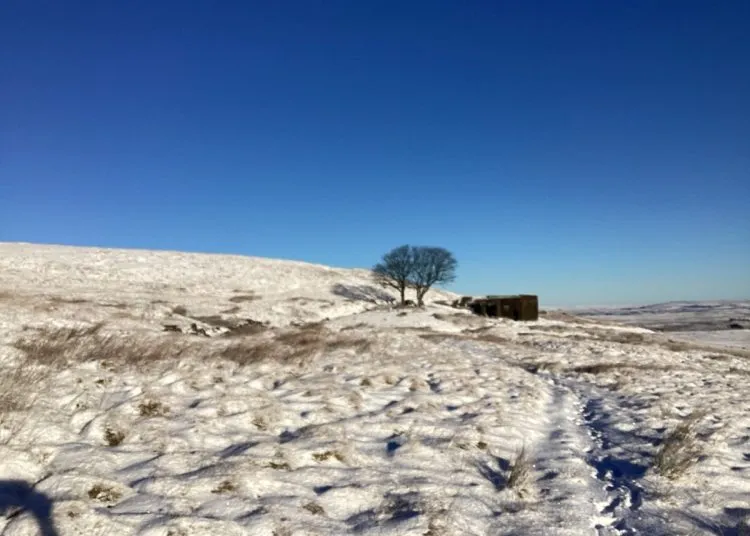
Photo by Nick MacKinnon
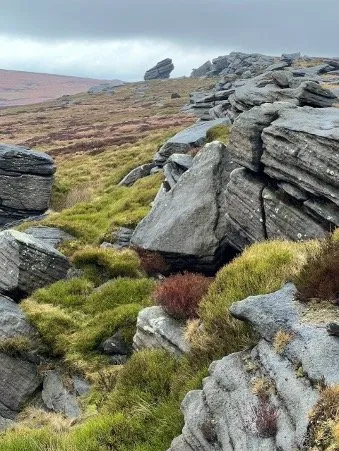
Photo by Ali West
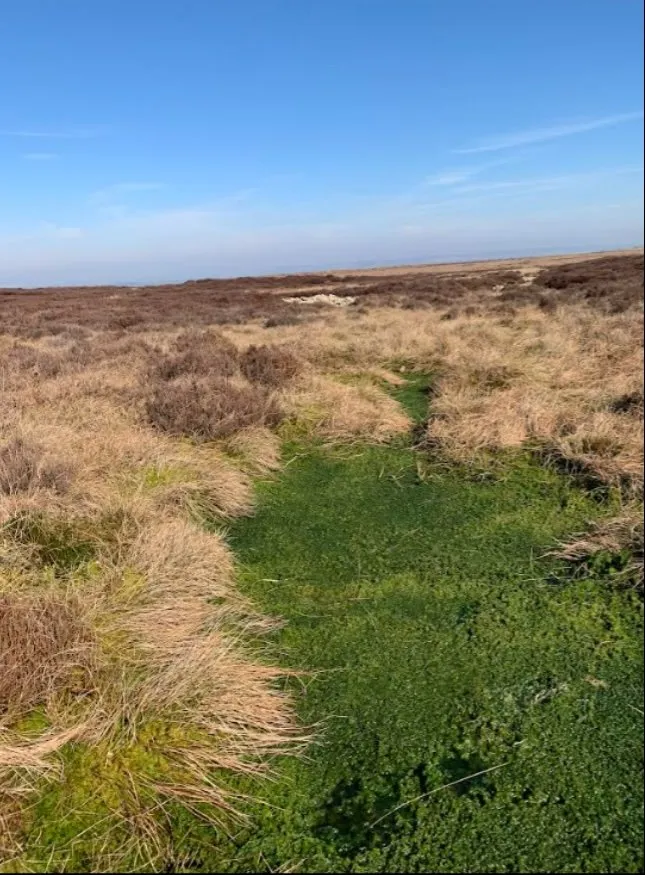
Photo by Nick MacKinnon
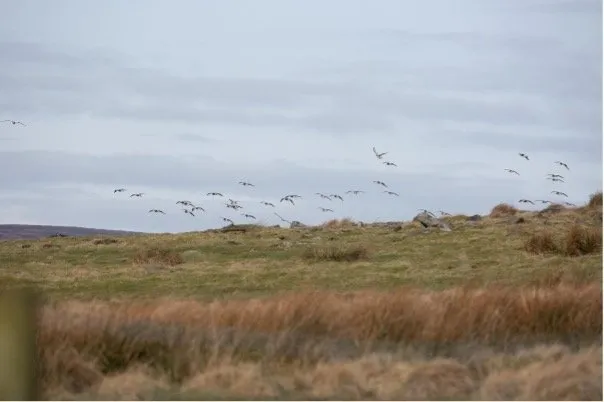
Photo by Kate Haslegrave
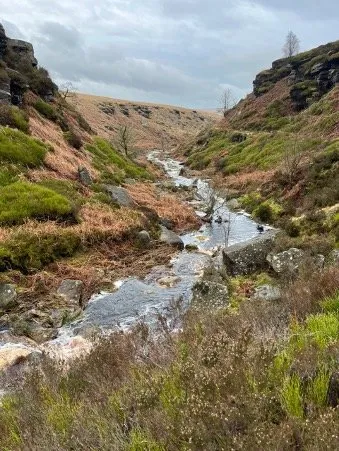
Photo by Ali West