Natural England Raises Fundamental Concerns Over Calderdale Energy Park
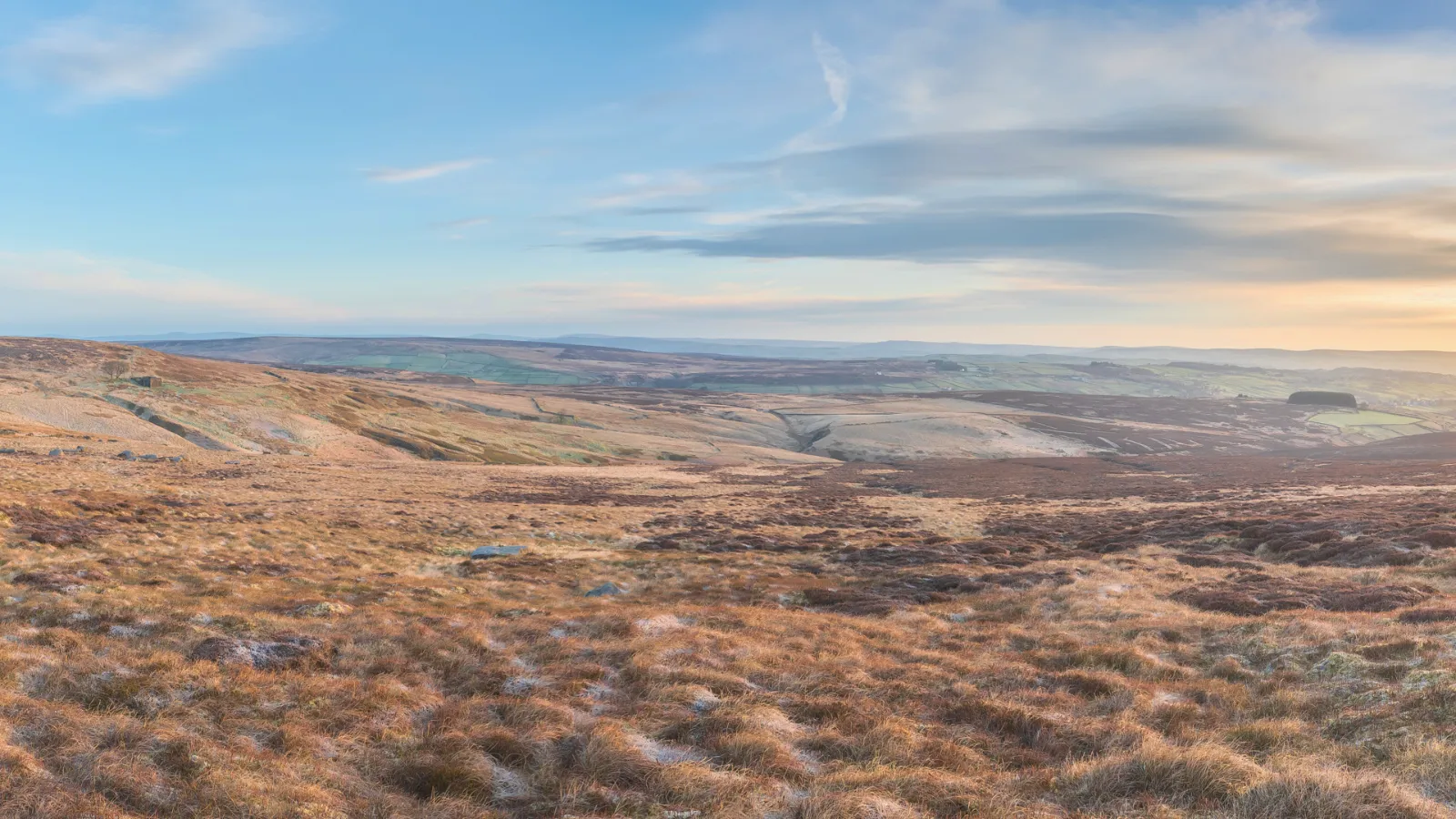
Natural England’s statutory response to the proposed Calderdale Energy Park (CEP) has raised a wide range of concerns about the environmental information currently provided for the development on Walshaw Moor.

Dated 10 June 2026, the response follows the developer’s Section 42 statutory pre-application consultation. Natural England says it has reviewed the Preliminary Environmental Information Report (PEIR) and supporting documents in the areas relevant to its remit. It also makes clear that further comments may follow when documents such as the shadow Habitats Regulations Assessment and Report to Inform European Sites Assessment are produced.

The significance of the response lies not simply in its length, but in the nature of the concerns it records. Natural England has colour-coded its detailed comments: red identifies “fundamental concerns which it may not be possible to overcome in their current form”, while amber identifies cases where more information is required before the impacts or proposed mitigation can be properly understood. Yellow comments record disagreement with the applicant’s approach without Natural England currently considering them material to the decision, while grey entries are notes for attention.

Peat and hydrology at the centre of the concerns

One of the clearest themes running through the response is the treatment of Walshaw Moor’s peatland.

Natural England says the assessment needs to consider the wider eco-hydrological functioning of the peatland, rather than treating individual areas in isolation. It advises that impacts on blanket bog and the underlying peat should be assessed at the level of peatland hydromorphological units, including connected areas where necessary.

It also challenges aspects of the habitat classification used in the PEIR. Natural England says the site’s blanket bog resource falls within the relevant Annex 1 definition and considers the blanket bog, although modified, to be mostly stable and recovering and part of the SAC feature. It says that underestimating the quality and extent of the habitat has consequences for the assessment of impacts, mitigation and potential compensation.

The detailed tables contain a series of red-coded concerns relating to peat, including the proposed approach to peat reuse and restoration, construction compounds, temporary excavation, borrow pits, cable trenches, peat storage and the proposed peat-mass balance. These concerns go to the question of whether disturbance can genuinely be regarded as temporary or adequately compensated through reinstatement. The response repeatedly emphasises the functional and hydrological characteristics of peat, rather than simply the volume of material removed.

Birds and protected sites

Natural England also raises substantial concerns about the assessment of birds associated with the South Pennine Moors SPA.

Its advice says that the assessment should not rely on a simple numerical threshold for bird numbers. Frequency of use, species diversity, population trends, conservation objectives and the importance of the land as supporting habitat all need to be considered. Natural England specifically states that the familiar 1% “rule of thumb” should not be used on its own to define important functionally linked land around the SPA.

What this means for the planning process

Natural England is not, in this letter, making the final planning decision on Calderdale Energy Park. Nor does the response amount to a final determination that the development cannot proceed.

But it does establish that the current PEIR leaves significant questions still to be answered. Natural England says that the eventual appropriate assessment must robustly establish the residual effects on the SAC and SPA after mitigation. Where mitigation is relied upon, its advice says it must be effective, reliable, timely, guaranteed and of sufficient duration, with evidence supporting its effectiveness over the lifetime of the project.

The response therefore puts the quality of the environmental assessment under particular scrutiny as the Calderdale Energy Park proposal moves towards the Development Consent Order process.

For Walshaw Moor, the key questions are not confined to individual turbines. They concern the integrity of the wider peatland system, the treatment of protected habitats, the use of supporting land by SPA birds, the reliability of proposed mitigation and whether the environmental evidence is sufficiently robust for the impacts of the development to be properly understood.

Natural England’s full response provides the detailed evidence behind these concerns. Read the document for the full red, amber, yellow and grey comments and the technical advice that will need to be addressed as the project progresses.

Source: Natural England’s response to the Section 42 consultation on Calderdale Energy Park, dated 10 June 2026.

Stop Calderdale Energy Park © by Stronger Together to Stop Calderdale Windfarm

Stronger Together to Stop Calderdale Windfarm is licensed under Creative Commons Attribution-NonCommercial-ShareAlike 4.0 International
Natural England on Calderdale Energy Park: “likely to be insurmountable”

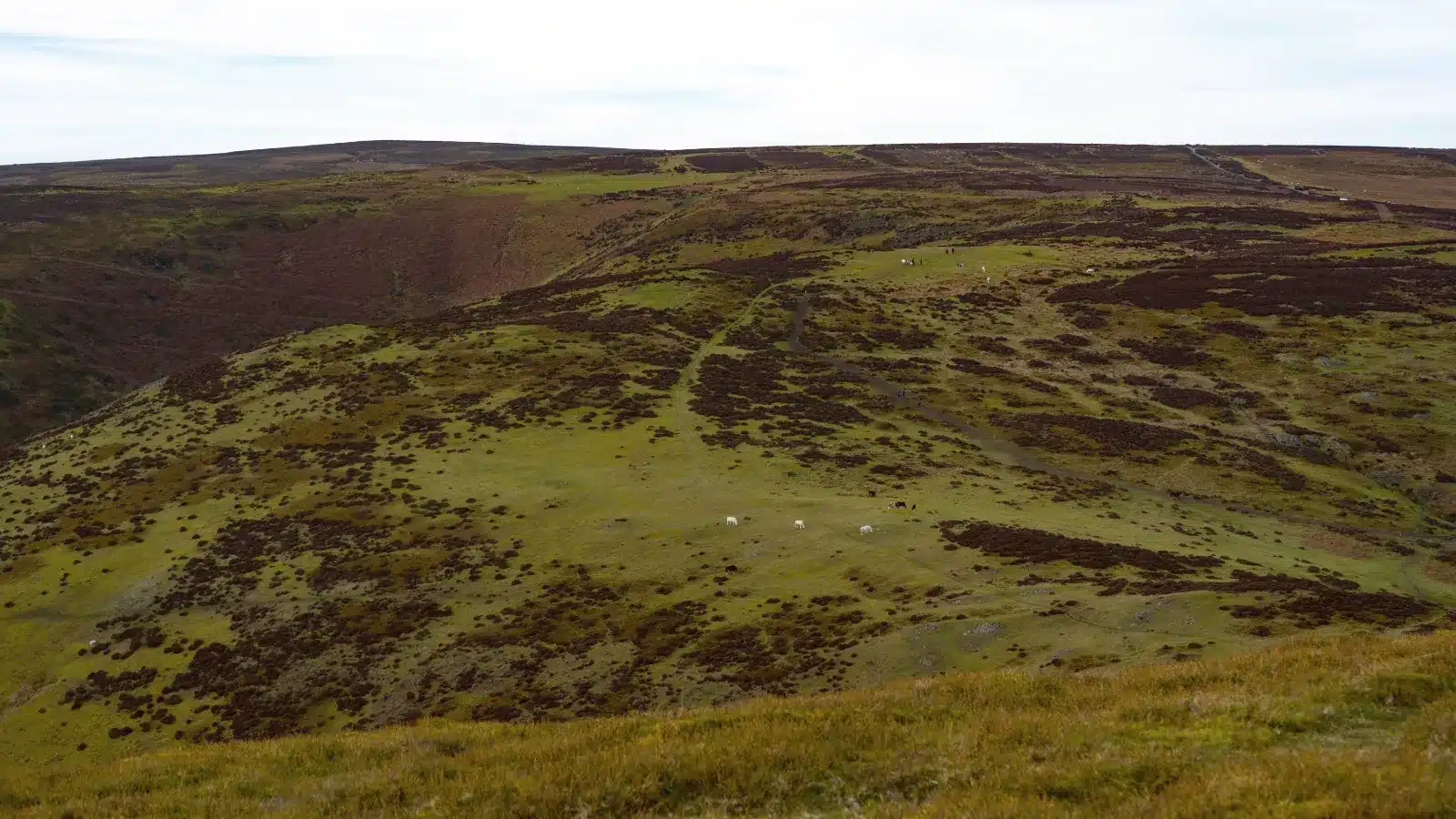
The question has been hanging over Calderdale Energy Park for some time: what does Natural England, the government’s statutory adviser on the natural environment, actually think about the proposal to build on Walshaw Moor?

Now we have a clear answer.

A covering letter dated 10 June 2026, accompanying Natural England’s formal response to the Section 42 consultation on Calderdale Energy Park, sets out fundamental concerns about the proposed development and its potential effects on protected habitats, birds, peatland, landscape and ecosystem functioning.

Natural England says the evidence in the Preliminary Environmental Information Report (PEIR) demonstrates that the proposed site is an “exceptional area for nature”, containing internationally important habitats, birds and landscape character. The agency notes that baseline surveys recorded more than 100 bird species and more than 1,000 hectares of irreplaceable blanket bog — identified as the key feature of the Special Area of Conservation (SAC).

Natural England also says it believes the quality of the SAC habitats and their ecosystem functioning have been consistently underestimated in the PEIR’s Biodiversity Chapter, with consequences for the assessment of impacts and the amount of mitigation and compensation required. It raises particular concerns about the carbon consequences of destroying or damaging peatland, saying that potential CO₂ emissions have not been adequately accounted for because of what it describes as under-precautionary assumptions concerning peat volume, carbon density, storage, restoration effectiveness, hydrology and electricity yield

The agency identifies a wide range of potential impacts. These include displacement, disturbance, collision risk and habitat loss for birds; destruction and long-term degradation of peatland; loss of biodiversity; damage to peatland ecosystem functioning; and the release of CO₂. It also identifies significant effects on the Calderdale Special Landscape Area, which Natural England says has high national value and cultural significance as Brontë Country, as well as wider effects on four Protected Landscapes and their settings.

There is also a significant issue around site selection and alternatives. Natural England points to national policy stating that applicants should rule out other locations before siting on peatland, particularly areas of deep peat. It says the PEIR does not demonstrate how alternative non-peatland locations were identified or considered, and advises that alternative sites should be explored beyond the restrictive parameters proposed in the site’s selection criteria.

And Natural England has considered whether the proposed changes to Calderdale Energy Park have solved these problems. The proposal has already been reduced from 65 to 34 turbines, while the battery storage and solar elements have been removed. However, Natural England says that although these changes have reduced some localised impacts, the overall impacts remain extremely high. It notes that substantial infrastructure, including turbines, access tracks and cabling, remains on deep peat.

The most striking part of the letter concerns compensation. Natural England says it has concerns about the technical and ecological feasibility of compensating for the scale and complexity of the proposed loss of irreplaceable habitat, bird impacts and changes to ecosystem functioning.

Its reasoning is stark

Blanket bog cannot simply be recreated. It takes thousands of years to form and depends on particular climatic and hydrological conditions. Natural England also says that recreating an extensive, complex upland habitat mosaic capable of supporting a similar diversity and density of breeding birds is not considered possible within any realistic timescale.

That leads to Natural England’s central conclusion. The agency advises that it does not expect it will be possible to agree effective measures that adequately compensate for the effects of the development. Overall, it considers these issues “likely to be insurmountable” in its engagement with the application and in relation to compliance with the Habitats Regulations.

Natural England says it will continue engaging with the developer and would welcome Expert Topic Groups involving relevant consultees, including the Environment Agency. But it adds that it does not expect it will be possible to reach agreement on key issues.

For Calderdale Energy Park, this is a significant intervention from the statutory nature conservation adviser. The full Natural England response deserves careful reading – because it sets out, in considerable detail, why the agency considers the environmental challenges created by the proposed development to be so difficult to resolve.

Now we know what Natural England thinks.

Source: Natural England’s response to the Section 42 consultation on Calderdale Energy Park, dated 10 June 2026.

Stop Calderdale Energy Park © by Stronger Together to Stop Calderdale Windfarm

Stronger Together to Stop Calderdale Windfarm is licensed under Creative Commons Attribution-NonCommercial-ShareAlike 4.0 International
CEP say “it’s not your job to check the PEIR”  – Nick MacKinnon says “ I have to check it because you don’t”

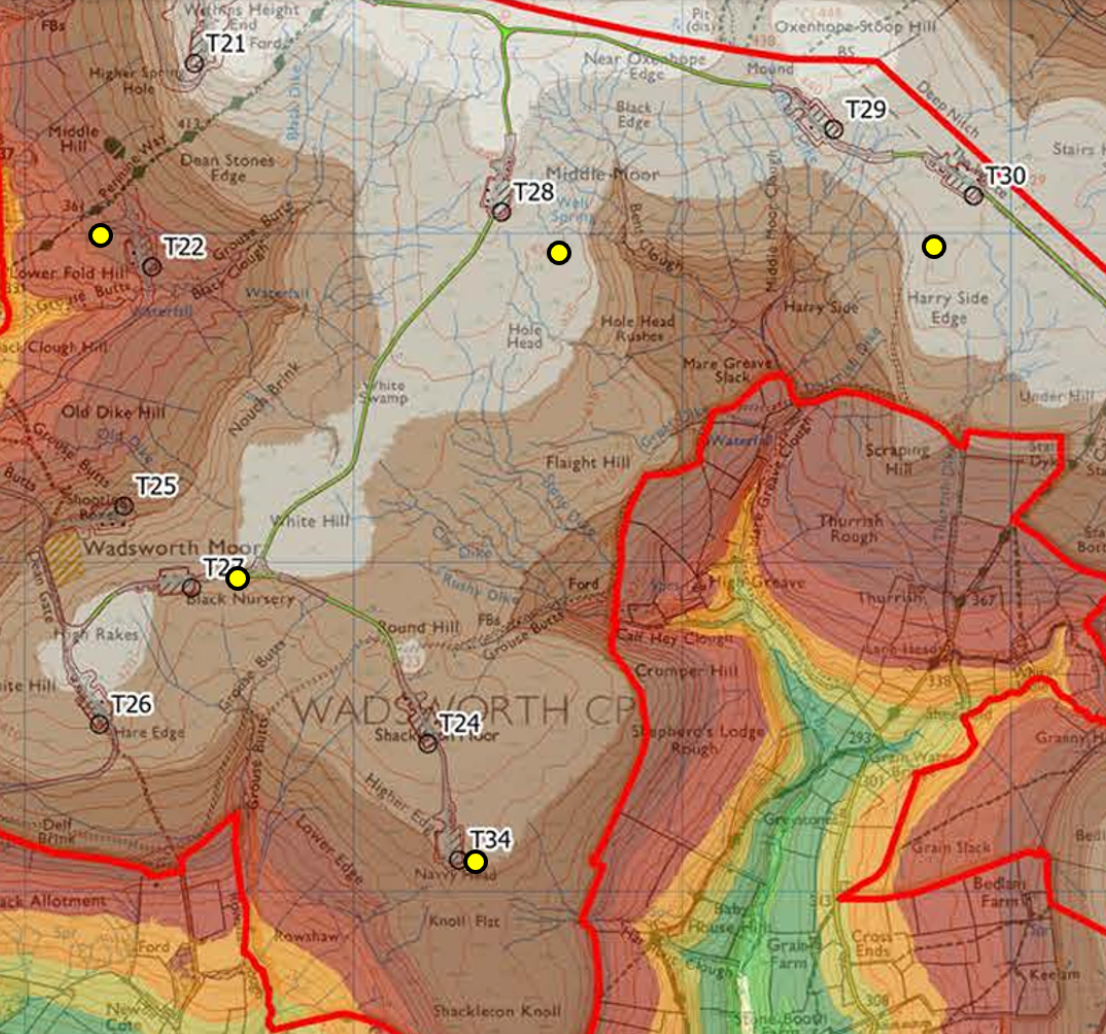
The other day, ST campaigner Nick MacKinnon was working on producing a fairly specialised map of the proposed wind farm site for use in advising a statutory consultee. This is bread and butter for Nick and he set out on what he thought would be a pretty mundane task. Because CEP had not provided a plain map of the infrastructure he used the map provided by CEP in the Preliminary Environmental Information Report (PEIR) showing where the peat slides would finish (if they were to happen).

This map is the cleanest of the maps provided. He was trying to transfer the locations of the turbines onto the map he was making for me but Turbine 28 (on the pristine peat of Wadsworth Moor) seemed out of place. He went the spreadsheet of turbine locations published in the PEIR, which are given as grid references to the nearest millimetre. The ‘spreadsheet’ turbines were not in the same place as the ‘map’ turbines. Three of them were 200m out. Nick plotted the ‘spreadsheet’ turbine locations on the PEIR map of the locations and the result is shown in the pdf attachment.

The PEIR spreadsheet is the only correct source of turbine locations for members of the public who are looking at the layout and the spreadsheet is WRONG.

In his capacity as editor of the Walshaw Turbines Research Group, one of the members of our mighty Stronger Together to Stop Calderdale Windfarm coalition, sent a formal notification to Project Director Christian Egal, Executive Chairman Christopher Wilson, to Dr Ghazi Osman, the sole director who represents the Saudi investors and to Katherine King who is the Planning Inspectorate’s point of contact for the development.

Then Nick went to the consultation at Hebden Bridge. The bad news had already reached the band of CEP consultants. The minor characters were very nervous about talking to him. He served Christian Egal and Ashley Robinson, CEP’s chief planning consultant, with the notification. The last time Nick had talked to Ashley Robinson (at Denholme) Robinson had told him that it was ‘not your job to check the PEIR’ and Nick had presciently said ‘I have to check it because you don’t’.

On returning from Hebden Bridge an email from Christian Egal was waiting in Nick’s inbox. After thanking Nick for bringing this error to his attention Egal promised that these errors would be corrected as soon as possible, that the corrected documents would be marked as errata and that he would take the following steps to ensure stakeholders are aware:

1. We will notify all prescribed consultees.
2. We will notify local MPs.
3. We will notify everyone who has already submitted feedback to the current statutory public consultation and draw their attention to the change, inviting them to submit further representations should they wish.

Egal does not intend to alter the statutory consultation process nor to re-run the Denholme and Oxenhope meetings (though they were of course based on incorrect information).

What this sorry episode shows is the incompetence of CWF Ltd around important but simple things.

None of us can have any confidence in what they do or so, and we wonder whether the Saudi investors are beginning to feel the same way…

Stop Calderdale Energy Park © by Stronger Together to Stop Calderdale Windfarm

Stronger Together to Stop Calderdale Windfarm is licensed under Creative Commons Attribution-NonCommercial-ShareAlike 4.0 International
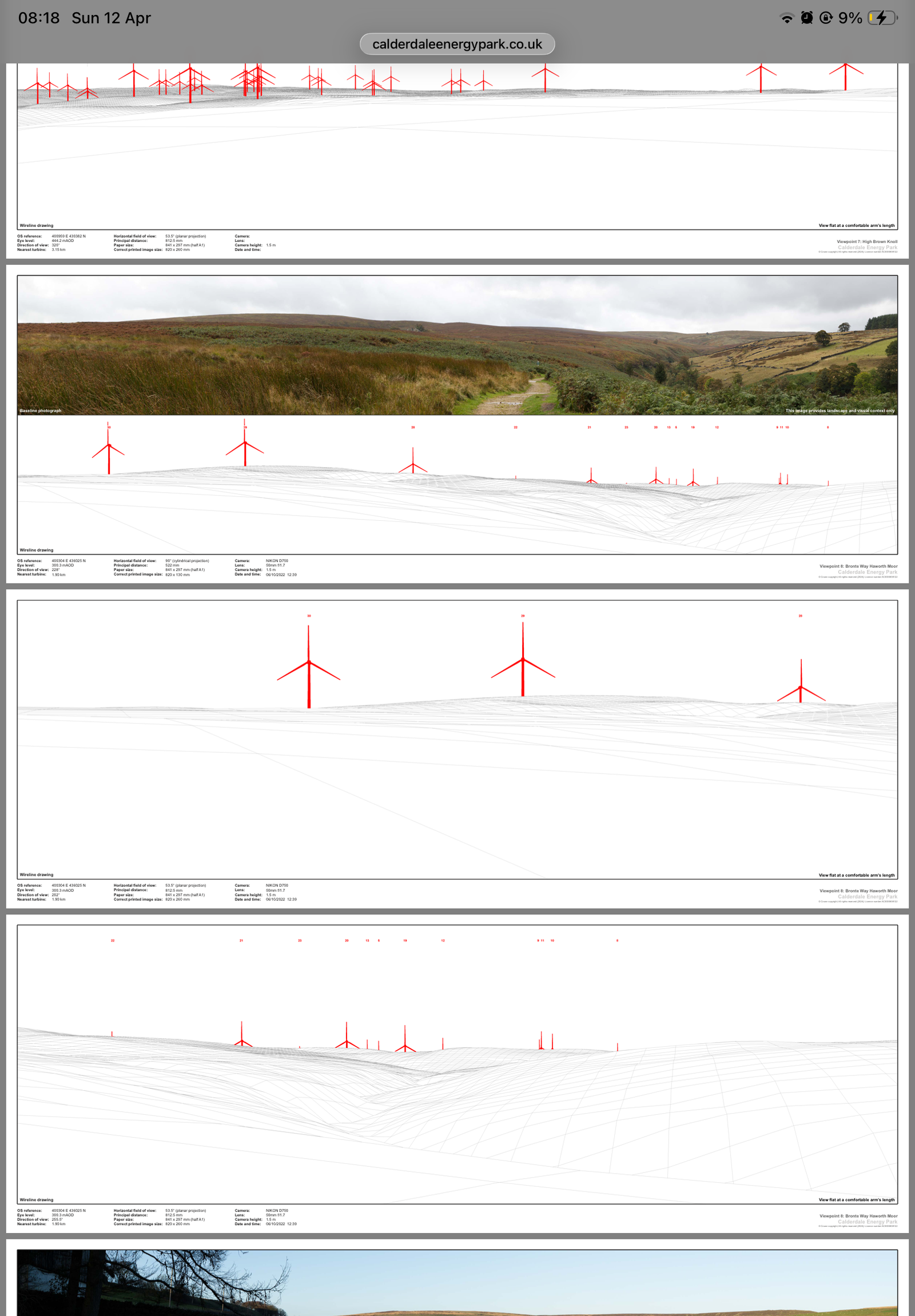
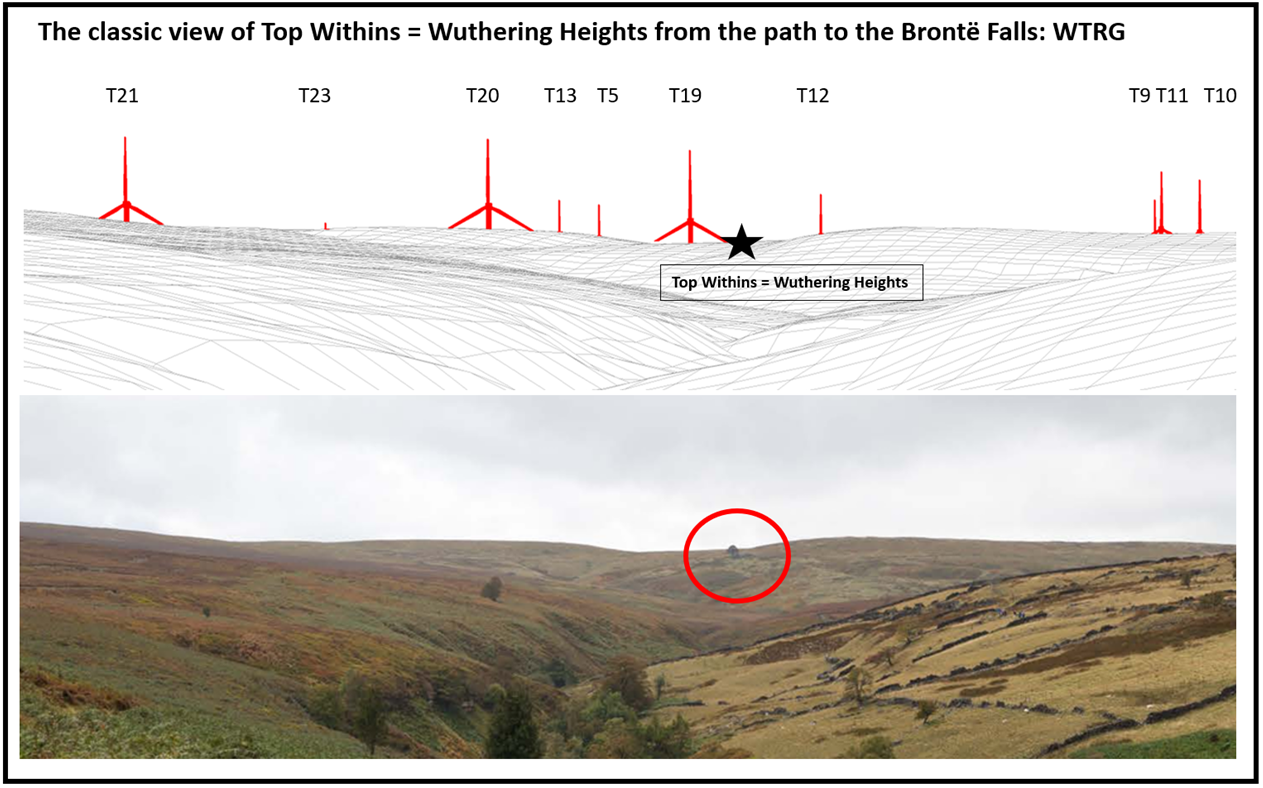
This is what Top Withins will look like

In their Preliminary Environmental Impact Report (PEIR) Calderdale Energy Park have thoughtfully provided us with an image of how the landscape at Top Withins (widely believed to be the inspiration for the location of Wuthering Heights in Emily Brontë’s novel of that name) would look. Nick MacKinnon of the Stronger Together group Walshaw Turbines Research Group has aligned the photograph given in the PEIR of the view from the path to Top Withins from the Brontë waterfall with the ‘wire diagram’ of the landscape and turbines that the PEIR calculates from the CEP image, and has marked Top Withins on the wire diagram. You can look at this yourself in Appendix 12.2 of the PEIR

Stop Calderdale Energy Park © by Stronger Together to Stop Calderdale Windfarm

Stronger Together to Stop Calderdale Windfarm is licensed under Creative Commons Attribution-NonCommercial-ShareAlike 4.0 International